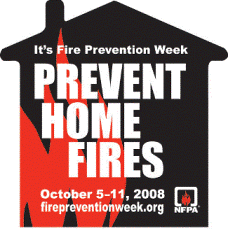
Sunday starts the beginning of Fire Prevention Week (October 5 - 11, 2008) and the theme for this year is "Prevent Home Fires". Your home should be a safe haven. But do you regularly check for home fire hazards? If not, there is the potential for danger. Fire departments responded to nearly 400,000 home fires in 2006. The U.S. Fire Administration ( http://www.usfa.dhs.gov (opens in a new tab) ) offers the following tips:
Cooking Fires
Many families gather in the kitchen to spend time together, but it can be one of the most hazardous rooms in the house if you don't practice safe cooking behaviors. Cooking equipment, most often a range or stovetop is the leading cause of reported home fires and home fire injuries in the United States. Cooking equipment is also the leading cause of unreported fires and associated injuries.
Watch What You Heat!
The leading cause of fires in the kitchen is unattended cooking. Stay in the kitchen when you are frying, grilling, or broiling food. If you leave the kitchen even for a short period of time, turn off the stove. If you are simmering, baking, roasting, or boiling food, check it regularly, remain in the home while food is cooking and use a timer to remind you that you're cooking. STAY ALERT! To prevent cooking fires, you have to be alert. You won't be if you are sleepy, have been drinking alcohol, or have taken medication which makes you drowsy. Remember to always keep your stovetop, burners and oven clean. Keep potholders, oven mitts, wooden utensils, paper or plastic bags, food packaging, and towels away from the stovetop. Always wear short or close fitting sleeves when cooking.
Safe Cooking Behaviors
Choose the right equipment and use it properly! Always use cooking equipment tested and approved by a recognized testing facility. Follow manufacturers' instructions and code requirements when installing and operating cooking equipment. Plug microwave ovens and other cooking appliances directly into an outlet. Never use an extension cord for a cooking appliance, as it can overload the circuit and cause a fire.
Heating
The high cost of home heating fuels and utilities have caused many Americans to search for alternate sources of home heating. The use of fireplaces, wood burning stoves, and space heaters are growing rapidly. The misuse of wood stoves, portable space heaters, and kerosene heaters are major contributing factors in residential fires. You can prevent the loss of life and property resulting from heating fires by being able to identify potential hazards and following a few safety tips.
Wood Stoves
Wood stoves cause over 4,000 residential fires every year. Carefully follow the manufacturer's installation and maintenance instructions. Check for cracks and inspect legs, hinges and door seals for smooth joints and seams. Use only seasoned wood for fuel, not green wood, artificial logs, or trash. Have your chimney and pipes professionally inspected and cleaned annually and check monthly for damage and obstructions.
Electric Space Heaters
Buy only heaters evaluated by a nationally recognized laboratory, such as Underwriters Laboratories (UL). Check to make sure it has a thermostat control mechanism, and will switch off automatically if the heater falls over. Space heaters need space; keep combustibles at least three feet away from each heater. Always unplug your electric space heater when not in use.
Kerosene Heaters
Buy only heaters evaluated by a nationally recognized laboratory and check with your local fire department on the legality of kerosene heater use in your community. Never fill your heater with gasoline or camp stove fuel; both flare-up easily. Only use Crystal Clear K-1 Kerosene. Never overfill any portable heater. Use the heater in a well ventilated room.
Fireplaces
Have your chimney professionally inspected and cleaned annually. Check to ensure the damper is open before starting any fire. Never burn trash, paper, or green wood. Use a screen heavy enough to stop rolling logs and big enough to cover the entire opening of the fireplace to catch flying sparks. Make sure the fire is completely out before leaving the house or going to bed. Store cooled ashes in a tightly sealed metal container outside the home.
BE FIRE SMART: Remember if a fire does start, it's imperative that you call 911 immediately to ensure a speedy response of the fire department. Waiting to call the fire department and trying to take control of the situation yourself may contribute to the spread of the fire. Even if you think you have put a fire out, you should still call. The fire department will check and make sure the fire is actually out. Remember...be fire smart!
--------------------
The Fire Prevention Week logo and information in this article have been reproduced from NFPA's Fire Prevention Week Web site ( http://www.firepreventionweek.org (opens in a new tab) ). ©2008 NFPA. |